TECHNOLOGY · 3 MIN READ ·
How Self-Healing PPF Works
How self-healing paint protection film recovers from light scratches and swirl marks, why heat helps, and what self-healing PPF cannot fix.
Self-healing is one of the most searched features of paint protection film. Here is what it means, how it works and where its limits are.
The elastic topcoat
A self-healing PPF has an elastic topcoat. When a light mark presses into it, such as a swirl from a wash mitt or a fingernail scuff near a door handle, the material is deformed rather than cut away. Over time the topcoat is designed to flow back towards its original shape, and the mark fades.
Why heat helps
Many self-healing films recover faster when warm. Parking in the sun or rinsing with warm water can speed up the recovery of light marks. Installers sometimes use gentle heat for the same reason.
What self-healing can fix
- Fine swirl marks from washing and drying - Light scuffs around handles and the boot edge - Light marks from brushing past the car
What it cannot fix
- Deep scratches that cut through the topcoat - Tears or punctures in the film - Stone chips that break the film surface
In these cases the film has still done its job by taking the damage instead of the paint. A damaged section of film can be replaced by an installer.
Self-healing in the EAGLE PPF range
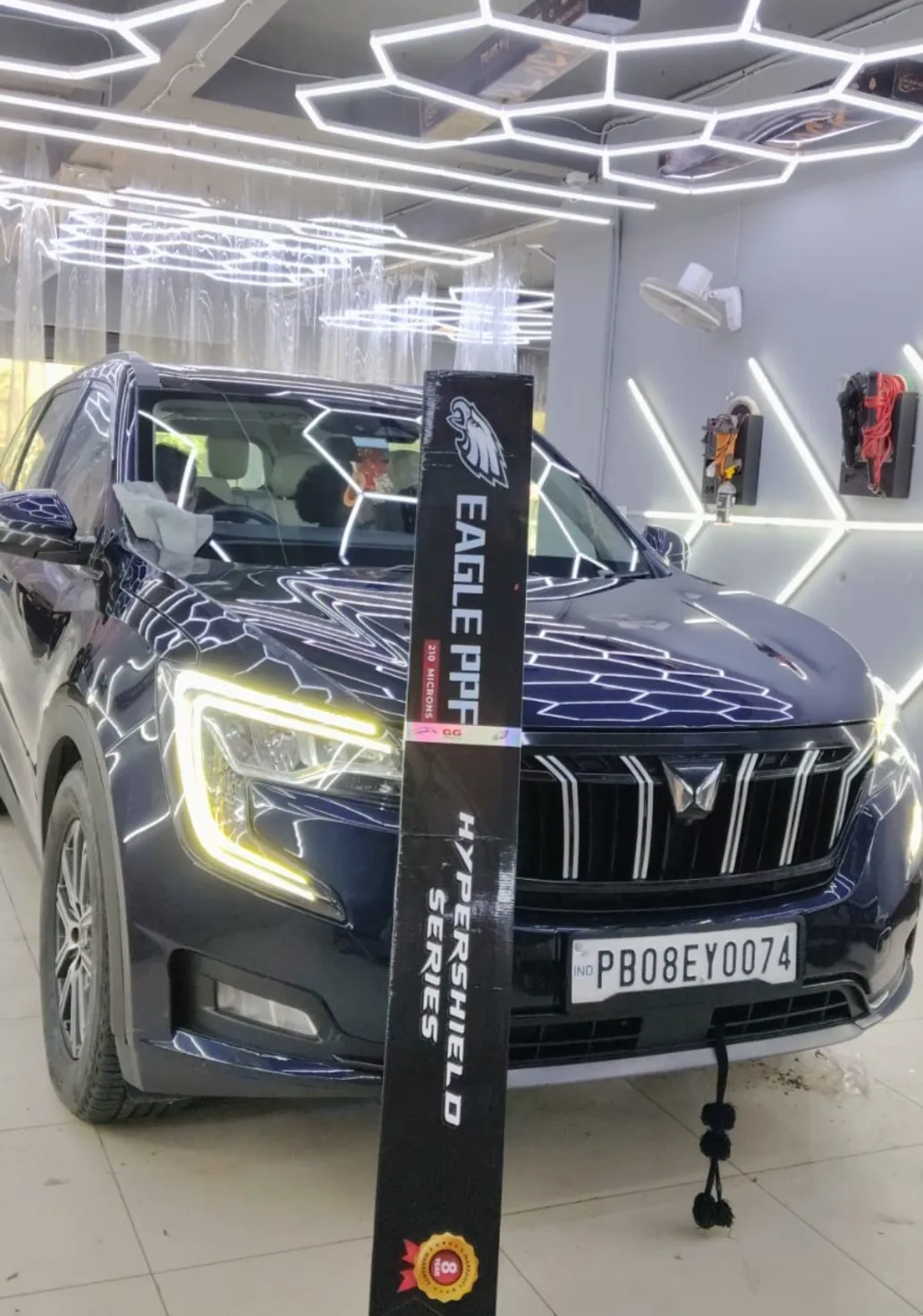
- Standard Series: Instant Self-Healing Technology - HyperShield Series: HyperHeal Technology, with an Ultra-Hydrophobic Topcoat and Crystal Gloss - Interior Precut: Instant Self-Healing Technology for interior surfaces
Read more about EAGLE PPF technology or see our PPF aftercare guide.